Refrigerators and freezers for laboratory and medical applications - new test standard
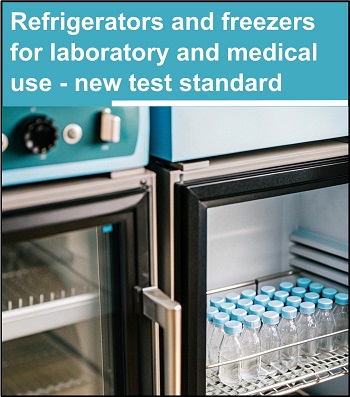
A new test standard for laboratory equipment is at the final preliminary (Fpr) stage. The standard (FprEN 18151) specifies the terminology, requirements and testing of refrigerators and freezers for laboratory and medical applications. This standard covers electrically operated medical refrigerating appliances intended for the cold storage of blood components, biological specimen, vaccines, medicines, reagents, or other laboratory preparations used in medical practice and research. The standard applies to refrigerating appliances equipped with a remote or integrated compression-type refrigerating system. It also covers the characteristics of liquid nitrogen cryogenic freezers but does not provide test methods.
The standard divides equipment into 7 different categories for use in 4 different climate classes (ambient conditions). The categories of equipment are:
- Blood bank refrigerators (temperature limit 2°C to 6°C)
- Laboratory refrigerators (temperature limit 2°C to 8°C)
- Pharmacy refrigerators (temperature limit 2°C to 8°C)
- Laboratory freezers (temperature limit ≤-15°C)
- Plasma freezers (temperature limit ≤-27°C)
- Ultralow freezers (temperature limit -90°C to -70°C)
The climatic classes for these categories are:
- Extended temperate (SN): 10 to 32°C
- Temperate (N): 16 to 32°C
- Subtropical (ST): 16 to 38°C
- Tropical (T): 16 to 43°C
As well as general design considerations, build quality and measurement of gross and net volume, the standard covers a methodology to measure temperature and energy performance of equipment. Temperature performance and energy consumption are measured in a test laboratory at a reference ambient temperature (25°C, 60% RH). Compliance with temperature control is also measured at the ranges for the specified climate class (at 75% RH). Further tests include door openings at the maximum ambient temperature condition and a power failure test at the reference condition.
RD&T’s Judith Evans was part of the standards committee who developed the new standard. If you would like more information on the standard or would like to discuss testing equipment at RD&T, please contact Judith at j.a.evans@rdandt.co.uk.